Scholarship
Germany Offers Tuition-Free Nursing Degrees and Paid Training Opportunities for International Students
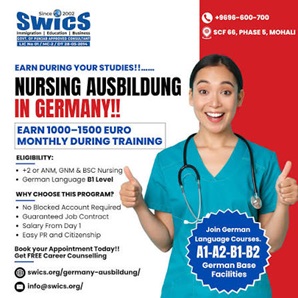
Germany continues to attract international students by offering world-class, tuition-free education at many of its public universities and hospitals, particularly in the high-demand field of nursing. Unlike many top study destinations where international students pay exorbitant tuition fees, most public institutions in Germany charge zero tuition for undergraduate nursing degrees. Students are only required to pay a nominal semester contribution, typically between €100 and €350, which covers university administrative costs and often includes a public transportation ticket for the region. For international students interested in healthcare careers, Germany provides robust pathways that combine professional clinical practice with financial support. Whether you want to jump straight into hands-on hospital work or pursue a formal academic degree, here is a complete guide to securing your nursing admission in Germany. Key Pathways to Study Nursing in Germany There are three primary routes for international students to become registered nurses in Germany. Understanding the difference is crucial for your application strategy. 1. The Ausbildung (Vocational Training) Pathway The Ausbildung is a highly popular, dual vocational training program that takes exactly three years to complete. It combines classroom learning at a vocational nursing school (Pflegeschule) with practical, hands-on experience in a hospital or care facility. The Financial Benefit: Instead of paying tuition, trainees are officially employed by the hospital and receive a monthly training salary (stipend). This stipend generally ranges from €1,100 to €1,500+ gross per month , and increases with each year of the program. Visa Advantage: To get a student visa in Germany, applicants usually need to prove they have sufficient funds. Because the Ausbildung monthly allowance meets or exceeds the German government's standard cost-of-living thresholds, successful applicants are frequently exempt from having to open a traditional blocked account (Sperrkonto). 2. The Dual Study (Duales Studium) Program For those seeking a formal academic degree alongside their hands-on training, the Duales Studium program is the perfect hybrid. It allows students to earn a Bachelor of Science (B.Sc.) in Nursing over 3.5 to 4 years while simultaneously completing clinical training in partnering hospitals. Depending on the specific university and healthcare employer, participants also receive a monthly training allowance similar to the Ausbildung, while graduating with a globally recognized university degree. 3. Direct B.Sc. Nursing at Public Universities Students can also opt for a traditional, full-time Bachelor’s degree in Nursing at a public university. While this route does not provide a monthly salary from a hospital, it remains tuition-free. Some public institutions well-known for healthcare and nursing education include: Fulda University of Applied Sciences Osnabrück University of Applied Sciences Bochum University of Applied Sciences Core Requirements for International Students Studying nursing in Germany requires careful preparation. Here is exactly what you need to qualify: 1. Academic Qualifications You must have completed a 12-year senior secondary education (such as WAEC/NECO for Nigerian students or standard 12th-grade board exams). While having a science background is highly preferred and sometimes mandatory for direct B.Sc. university admissions, the Ausbildung route is sometimes more flexible, accepting average grades from various academic backgrounds provided you meet the language requirements. 2. German Language Proficiency (The Most Important Factor) Because nursing education, training exams, and direct patient care are conducted entirely in German, language proficiency is non-negotiable. Most universities and training clinics strictly require proof of language proficiency at the B2 or C1 level . You must obtain an official language certificate from recognized bodies such as Goethe-Institut, ÖSD, or TELC . 3. Financial Proof & The Blocked Account (2026 Updates) If you are pursuing an academic track (Direct B.Sc. Nursing) that does not pay a monthly salary, you must prove you can support yourself financially. 2026 Blocked Account Amount: For 2026, the German government requires international students to deposit €11,904 per year into a Blocked Account (Sperrkonto), which allows you to withdraw a maximum of €992 per month for living expenses. Popular, digitally accessible blocked account providers include Expatrio, Fintiba, and Coracle. Note: If you secure a paid Ausbildung contract, this blocked account requirement is typically waived by the embassy. 4. Supporting Documentation When applying to hospitals or universities, prepare the following: A professionally formatted CV (in German). A strong Motivation Letter (in German) explaining your passion for nursing. A medical fitness certificate from a certified health worker proving you are physically capable of hospital shifts. A Police Clearance Certificate (PCC) proving you have no criminal record. Scholarships and Financial Aid Students pursuing standard university degrees who need extra financial support can explore database tools like the DAAD (German Academic Exchange Service) scholarship portal. DAAD and Erasmus+ scholarships can sometimes act as a replacement for the Blocked Account financial proof if the awarded amount is sufficient. Important Note Tuition-free education or a vacant vocational training slot does not mean admission is automatic. Applicants must satisfy all academic qualifications, pass rigorous language thresholds, meet visa regulations, and undergo professional background clearances set by the institution or employer. OGB Admission Hub Advice If your goal is a stable, highly respected healthcare career in Europe, Germany remains one of the most accessible and affordable destinations in the world due to its public education framework and paid vocational models. Your Action Plan: Start preparing early. Research academic equivalencies, gather your WAEC/secondary school documents, and most importantly, enroll in certified German language classes today. Reaching the B2 level takes consistent effort over several months, but it is the master key to unlocking a tuition-free nursing career in Germany.
Check your eligibilityUniversity requirements →Polytechnic requirements →Nursing college requirements →Get application assistance →
THE CONVERSATION
Questions & comments
Share your thoughts or ask a question about this update.
Loading comments…